MBBR vs SBR sewage treatment technologies compared — performance, cost, and suitability for residential and commercial projects in Kenya.
The demand for efficient, cost-effective, and sustainable sewage treatment plant (STP) technologies is growing rapidly as cities expand and environmental regulations become
more stringent. Two of the most popular and advanced biological wastewater treatment processes in use today are the Moving Bed Biofilm Reactor (MBBR) and the Sequencing Batch Reactor (SBR). Each technology offers unique advantages and is suited to different applications, but which one is right for your project? In this in-depth comparative study, we’ll explore the principles, design, operation, benefits, limitations, and ideal use cases for both MBBR and SBR STP technologies.
WHAT IS MBBR TECHNOLOGY IN SEWAGE TREATMENT PLANTS?
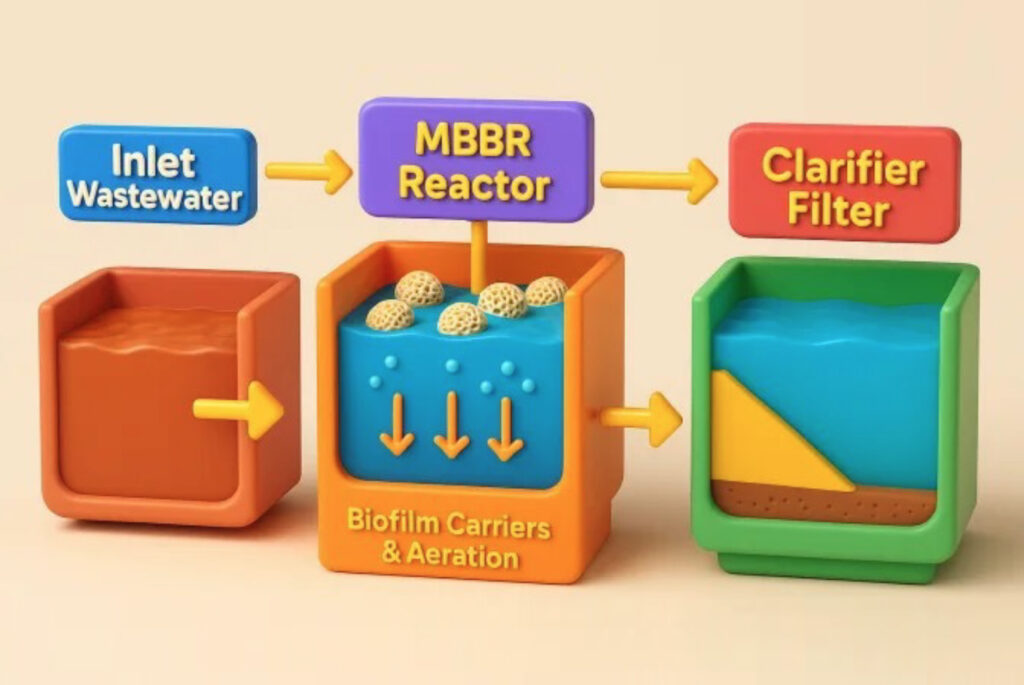
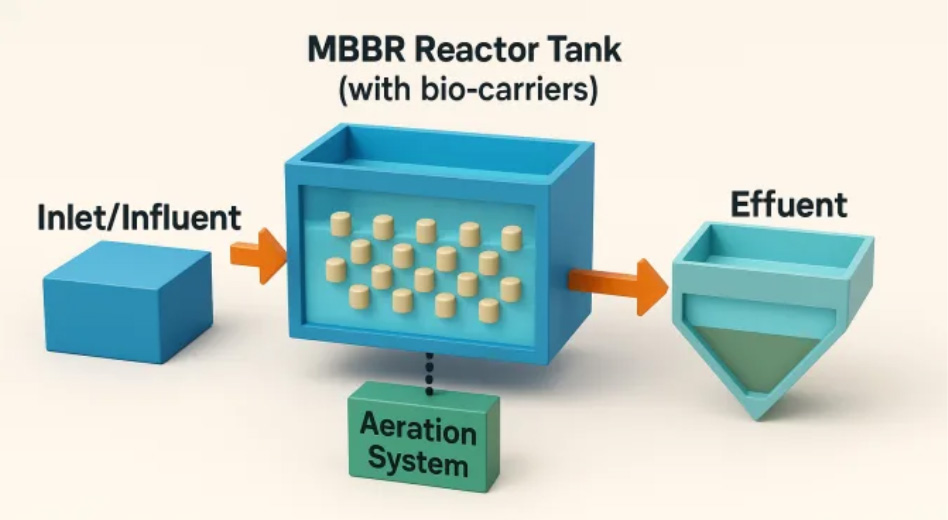
MBBR (Moving Bed Biofilm Reactor) is an advanced wastewater treatment process that utilizes free-floating plastic carriers (biofilm media) within an aeration tank. These carriers provide a large surface area for the growth of beneficial microorganisms, which form a biofilm and degrade organic matter and nutrients in the wastewater.
How MBBR Works
- Biofilm Carriers: Specially designed plastic elements (often made from HDPE) float freely in the reactor, offering a protected surface for microbial attachment and biofilm
- Aeration: Oxygen is supplied via diffusers to support aerobic microbial activity and keep the carriers in
- Continuous Flow: Wastewater flows continuously through the reactor, ensuring constant treatment and high process
Key Features of MBBR STP
- High treatment efficiency for BOD, COD, ammonia, and nitrogen
- Compact footprint, making it ideal for space-constrained
- Low sludge production, reducing handling and disposal
- Simple operation and minimal maintenance
- Easy scalability by adding more
- Robust performance, even with fluctuating loads and shock
WHAT IS SBR TECHNOLOGY IN SEWAGE TREATMENT PLANTS?
SBR (Sequencing Batch Reactor) is a fill-and-draw activated sludge process that treats
wastewater in batches. All treatment phases—equalization, aeration, settling, and decanting—occur sequentially in a single tank.
How SBR Works
- Batch Operation: Wastewater is treated in discrete cycles, each comprising fill, react (aeration), settle, decant, and idle
- Activated Sludge: Microorganisms suspended in the tank break down organic pollutants during the aeration
- Cycle Flexibility: The duration of each phase can be adjusted to optimize performance for varying influent
Key Features of SBR STP
- All phases of treatment (equalization, aeration, clarification) occur in one
- High operational flexibility—cycle times and aeration can be adjusted as
- Capable of achieving stringent effluent standards for BOD, COD, and
- Suitable for small to medium communities and decentralized
- Can be fully automated for minimal manual
ADVANTAGES AND DISADVANTAGES OF MBBR AND SBR STP TECHNOLOGIES
Advantages of MBBR STP
- High Efficiency: Superior removal of BOD, COD, ammonia, and
- Compact Design: Requires less space than conventional activated sludge
- Low Sludge Production: Reduces sludge handling and disposal
- Simple Operation: Minimal operator skill
- Robustness: Handles load fluctuations and toxic shocks
Disadvantages of MBBR STP
- Media Cost: Initial investment in biofilm
- Continuous Aeration: Higher energy demand compared to intermittent systems, thus high power consumption costs.
- May Require Tertiary Treatment: For very stringent effluent
Advantages of SBR STP
- Integrated Treatment: All phases in one tank, reducing infrastructure needs, thus Fewer tanks and
- Lower capital costs: SBRs generally have a lower initial investment cost compared to MBR and MBBR
- Operational flexibility: SBRs have the advantage of adjusting the treatment cycle based on influent characteristics, making them well-suited for wastewater with variable Easily adjusts to influent variations and nutrient removal goals.
- High Effluent Quality: Meets stringent discharge and reuse
- Automation-Friendly: Can be fully
- Reduced energy consumption: The intermittent nature of the SBR process allows for periods of non-operation, reducing overall energy costs
Disadvantages of SBR STP
- Batch Operation: Not ideal for very high or continuous
- Cycle Control: Requires precise timing and
- Sludge Production: Moderate, requiring periodic
- Peak Load Sensitivity: Performance can dip during peak inflow surges if not considered properly in initial
ADVANCED INSIGHTS: MBBR VS SBR – TECHNICAL, INDUSTRIAL, AND REGULATORY PERSPECTIVES BIOLOGICAL PROCESSES:
NITRIFICATION AND DENITRIFICATION
MBBR (Moving Bed Biofilm Reactor) and SBR (Sequencing Batch Reactor) are both engineered to achieve high levels of organic and nutrient removal, but they do so in different ways.
Nitrification is the process where aerobic bacteria convert ammonia in wastewater into nitrate, helping reduce nitrogen pollution. Denitrification follows, where other bacteria convert nitrate into nitrogen gas, which is safely released into the atmosphere.
MBBR systems use a mix of suspended and attached microbial growth. Special plastic carriers in the reactor provide a large surface area for biofilm, supporting a diverse community of bacteria that can handle both nitrification and denitrification. The constant motion of these carriers, driven by aeration, ensures effective oxygen transfer and process stability, even when wastewater characteristics change.
SBR systems carry out these biological processes in a single tank by alternating between aerobic (with oxygen) and anoxic (without oxygen) phases during each treatment cycle. This allows operators to precisely control the conditions needed for both nitrification and denitrification, making SBRs highly adaptable to changing influent loads.
THE ROLE OF PLASTIC CARRIER MEDIA IN MBBR
A defining feature of MBBR technology is the use of thousands of small, specially designed
plastic carriers that float and move within the aeration tank.
These carriers provide a huge surface area for biofilm to grow, allowing for a higher concentration of active bacteria compared to conventional systems. The movement of the carriers, kept in motion by aeration, ensures even treatment and prevents clogging. This design makes MBBR systems highly resilient to sudden changes in load or the presence of toxic substances, which helps maintain stable operation.
SEQUENCE OF OPERATIONS IN SBR SYSTEMS
SBR technology combines all biological treatment steps in one tank, operating in a set
sequence:
- Fill: The tank receives incoming
- React: Aeration and mixing promote the breakdown of pollutants by
- Settle: Aeration stops, allowing solids to settle
- Decant: The clear treated water is removed from the
- Idle: The system prepares for the next
This batch approach allows SBR plants to adjust the timing and length of each phase, optimizing treatment for different types of wastewater. However, it does require precise control and automation to ensure consistent results.
MBBR VS SBR: HOW DO THEY COMPARE?
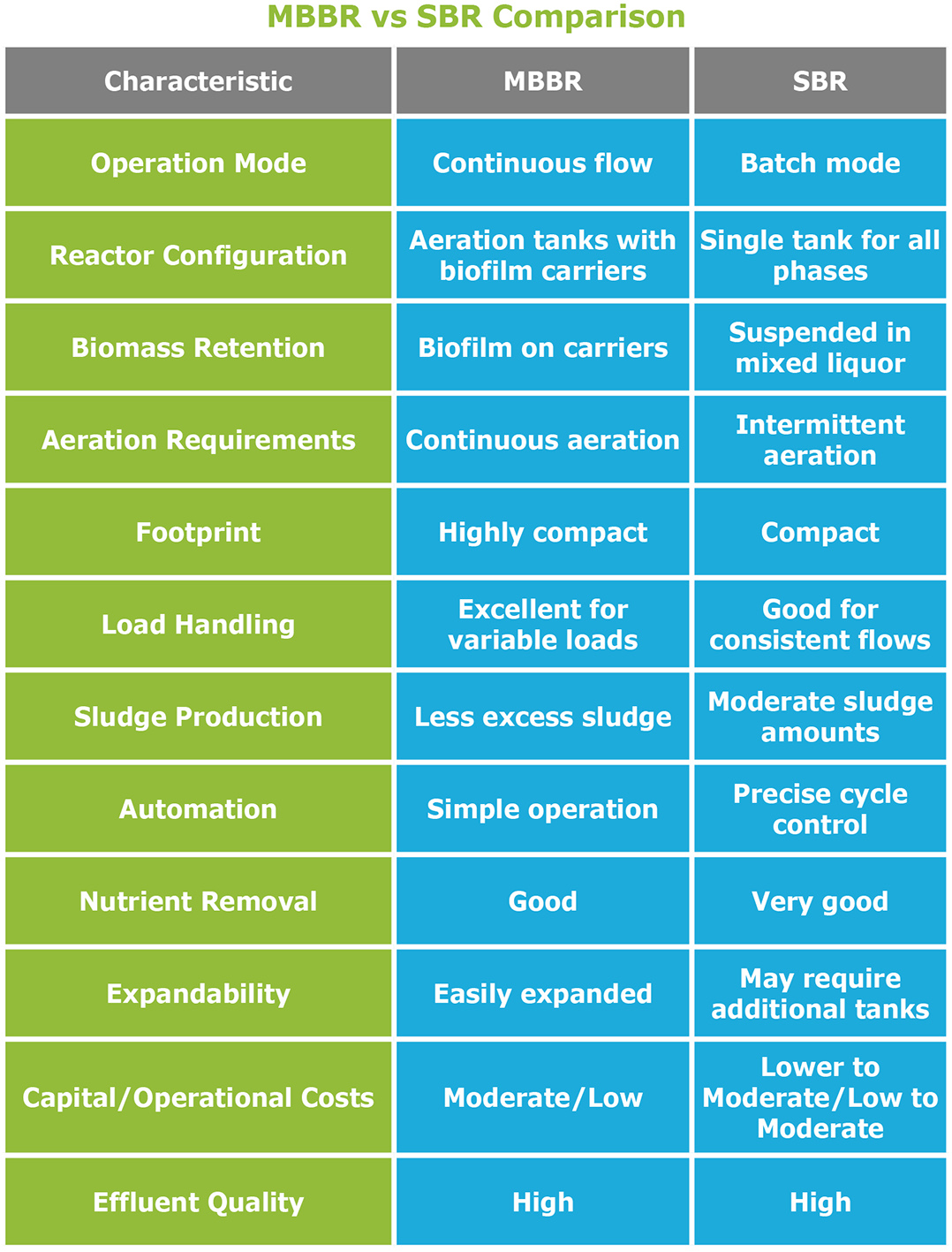
When choosing between MBBR and SBR for your sewage treatment plant, it’s important to consider several key factors: operation mode, footprint, scalability, sludge management, energy consumption, and effluent quality.
Operation Mode
- MBBR: Operates as a continuous flow system. Wastewater flows into the reactor, is treated as it passes through the moving bed of biofilm carriers, and exits as treated
- SBR: Operates in batch mode. Wastewater is collected and treated in cycles, with each cycle including filling, reacting, settling, and decanting
Reactor Configuration
- MBBR: Uses one or more aeration tanks filled with biofilm The carriers provide a habitat for microorganisms to grow and treat the wastewater.
- SBR: Uses a single tank (or multiple tanks in parallel) for all treatment No media is used; the process relies on suspended activated sludge.
Biomass Retention
- MBBR: Biomass is retained as a biofilm on the carriers, providing high resistance to shock loads and toxic
- SBR: Biomass is suspended in the mixed liquor and settles during the settling
Aeration Requirements
- MBBR: Requires continuous aeration to keep carriers moving and supply oxygen to the
- SBR: Aeration is intermittent, only during the react phase, which can reduce energy
Footprint and Space Requirements
- MBBR: Highly compact due to the high surface area provided by the Ideal for sites with limited space.
- SBR: Also compact, as all treatment occurs in a single tank, but batch operation can limit throughput for very large
Load Handling and Flexibility
- MBBR: Excellent for variable and shock loads due to the stability of the
- SBR: Good for moderate, consistent Batch operation can be less effective for highly variable influent.
Sludge Production and Management
- MBBR: Produces less excess sludge, reducing handling and disposal
- SBR: Produces moderate amounts of sludge, which must be removed
Automation and Operation
- MBBR: Simple operation with minimal operator Routine checks and occasional cleaning of aeration grids and sieves.
- SBR: Requires precise cycle control and automation for optimal
Nutrient Removal
- MBBR: Good nutrient removal (especially with post-treatment or hybrid designs).
- SBR: Very good nutrient removal, as cycles can be tailored for nitrification, denitrification, and phosphorus
Expandability
- MBBR: Easily expanded by adding more media or
- SBR: Expansion may require additional tanks or changes to cycle
Capital and Operational Costs
- MBBR: Moderate capital cost, low operational and maintenance
- SBR: Lower to moderate capital cost, low to moderate operational
Effluent Quality
Both technologies can achieve high effluent quality (BOD <10 mg/L, COD <40 mg/L, TSS
<20 mg/L) with proper design and operation.
INDUSTRIAL APPLICATIONS REAL-WORLD USE CASES
- In the textile industry, MBBR is often chosen for its ability to treat high-strength wastewater with varying organic loads and color, while SBR is popular for handling batch discharges and fluctuating
- Pharmaceutical manufacturers benefit from SBR’s flexibility in managing complex and variable waste streams, while MBBR’s robustness is ideal for continuous, high-load operations.
- Food processing plants use both systems: MBBR for its compactness and shock load resistance, and SBR for its ability to deliver high-quality effluent through precise cycle
TECHNOLOGY TAILORING
MBBR can be retrofitted into existing treatment plants to increase capacity or improve nutrient removal. SBR is especially suitable for facilities with limited space and variable wastewater flows, thanks to its single-tank design.
ENVIRONMENTAL AND REGULATORY ASPECTS ENVIRONMENTAL BENEFITS
MBBR systems produce less sludge due to efficient biofilm processes, are highly resilient
to toxic shocks and load variations, and require less space.
SBR systems can produce very high-quality treated water suitable for reuse and offer flexible operation to meet strict discharge standards.
REGULATORY COMPLIANCE
Both MBBR and SBR technologies are widely recognized for helping industries and municipalities meet local and international wastewater discharge regulations, including those for organic and nutrient removal. Their adaptability also makes them a strong choice for future regulatory upgrades.
APPLICATIONS OF MBBR AND SBR SEWAGE
TREATMENT PLANTS
MBBR Applications
- Municipal STPs: Urban, peri-urban, and decentralized sewage
- Industrial Wastewater: Food & beverage, chemicals, textiles,
- Retrofitting: Upgrading existing plants for higher capacity or
- Space-Constrained Sites: Hospitals, hotels, residential complexes, commercial
SBR Applications
- Municipal STPs: Small and medium towns, rural clusters, and decentralized
- Industrial Wastewater: Where batch processing is
- Decentralized Systems: Schools, resorts, gated communities, and remote
- Variable Flows: Projects with intermittent or low
DESIGN, OPERATION, AND MAINTENANCE
CONSIDERATIONS
MBBR Design and Maintenance
- Carrier Fill Ratio: Typically 50–70% of tank
- Aeration: Continuous, via fine bubble
- Hydraulic Retention Time (HRT): Shorter due to high biomass
- Monitoring: Dissolved oxygen (DO), carrier movement, effluent
- Maintenance: Occasional cleaning of aeration grid and sieves; minimal media
SBR Design and Maintenance
- Cycle Programming: Fill, react, settle, decant,
- Aeration: Only during react
- Sludge Management: Periodic removal from
- Automation: PLC or timer-based control for cycle
- Maintenance: Decanter and aeration system checks; sludge
COST COMPARISON: MBBR VS SBR STP
- MBBR: Moderate capital cost due to media, but lower operational and maintenance costs thanks to reduced sludge and simple Power consumption is moderate (continuous aeration).
- SBR: Lower to moderate capital cost (fewer tanks), low to moderate operational costs, and lower energy use due to intermittent Automation and cycle control may add to initial costs.
Both systems offer excellent lifecycle value, but MBBR may be more cost-effective for industrial and high-load sites, while SBR is often preferred for small to medium communities due to lower initial investment and operational flexibility.
FREQUENTLY ASKED QUESTIONS (FAQS) ON MBBR AND SBR STP TECHNOLOGIES
Which is better for small communities: MBBR or SBR?
SBR is often preferred for small to medium communities due to its batch operation and lower capital cost. MBBR is ideal for sites requiring robust, continuous treatment and easy expansion.
Can MBBR handle industrial wastewater?
Yes, MBBR is highly effective for industrial effluents with variable composition and load.
Is SBR suitable for high-strength wastewater?
SBR can be designed for high-strength wastewater but may require longer cycles or additional tanks for optimal performance.
Which technology is easier to upgrade?
MBBR is easier to upgrade by simply adding more carriers, while SBR may require additional tanks or cycle adjustments.
What about sludge management?
MBBR produces less excess sludge, reducing handling and disposal costs. SBR produces moderate sludge, requiring periodic removal.
How do effluent qualities compare?
Both can achieve high effluent quality (BOD <10 mg/L, COD <40 mg/L) with proper design and operation.
What is the typical lifespan of MBBR media?
High-quality MBBR carriers can last 15–20 years or more with proper maintenance.
Does SBR require skilled operators?
SBR systems benefit from automation but do require some technical oversight for cycle programming and maintenance.
CONCLUSION: WHICH STP TECHNOLOGY
SHOULD YOU CHOOSE?
Both MBBR and SBR technologies offer proven, efficient, and sustainable solutions for sewage treatment plants. The best choice depends on your specific requirements:
- Choose MBBR STP for robust performance against load fluctuations, compact footprint, easy upgradability, minimal sludge production, and industrial or space-constrained
- Choose SBR STP for batch treatment flexibility, lower initial investment, simple integrated tank design, and small to medium municipal or decentralized